- The lawmakers welcome Tehran meeting between Iran, Makkah pact members as step toward Muslim unity
- Warn that continued attacks on Saudi Arabia could risk regional escalation and wider Muslim-world conflict
ISLAMABAD: Pakistani lawmakers on Tuesday welcomed talks between top security officials from the Makkah Defense Alliance nations and Iranian leaders in Tehran, calling for regional de-escalation and efforts to prevent further attacks on Saudi Arabia.
The meeting on Monday brought together defense representatives of Pakistan, Saudi Arabia and Turkiye with Iranian officials, amid fears of renewed fighting between Iran and the United States (US) and Israel and a wider conflict in the Middle East.
The meeting was attended by Saudi Defense Minister Prince Khalid bin Salman, Pakistani Defense Forces Chief Field Marshal Asim Munir, Turkish intelligence chief Ibrahim Kalin and Mohsen Rezaei, secretary of Iran’s Supreme National Security Council.
Rezaei described Monday’s talks as “very good,” saying a new atmosphere was emerging in the region even as Saudi Arabia reported fresh Houthi missile and drone launches toward the Kingdom on Tuesday.
Speaking to Arab News, Pakistani lawmakers from different political parties described the engagement between Makkah Defense Alliance nations and Iran as an important opportunity to prevent conflict among Muslim-majority countries.
“These attacks are unacceptable under any circumstances. We protest against them, and the state of Pakistan will certainly do whatever is possible on its part,” Pakistan’s State Minister for Power Abdul Rehman Kanju told Arab News, urging Muslim countries to overcome their differences and work together for the welfare of their people.
“I believe that the greatness of our Islam lies in the fact that we overcome all our differences and unite to work for the betterment of our people.”
The US and Israel launched the Middle East war with surprise attacks on Iran in late Feb. An April ceasefire brought an end to the initial phase of intense bombardment but the two sides have continued to vie for control over the Strait of Hormuz, through which around a fifth of the world’s oil and liquefied natural gas used to travel.
Iran has claimed control over the strait and has regularly targeted vessels that attempt to cross without its authorization, while the United States has imposed a counter naval blockade on Iranian ports. The war has since spread across the region to include fighting between Saudi Arabia and Yemen’s Iran-backed Houthis, who have repeatedly targeted Saudi energy, aviation and civilian infrastructure in recent weeks.
Amid heightened regional tensions, Turkiye, Pakistan and Saudi Arabia signed in Aug. the Makkah Joint Defense Agreement, under which an armed attack on one member is considered an attack on all.
Dr. Sharmila Faruqui, a member of the National Assembly from ruling coalition partner Pakistan People’s Party (PPP), described the Tehran meeting as “particularly significant,” given the current geopolitical tensions.
She said the Makkah pact was primarily intended to preserve peace and deter aggression but could be invoked if one of its members faced an attack or an imminent threat.
“I think we all condemn it [Houthi attacks]. Pakistan is very vocal and very clear about this that for us, Saudi Arabia and the holy sites and the holy cities are a red line,” Faruqui told Arab News, adding that Islamabad would back Saudi Arabia under the pact.
“We will support, [provide] all kinds of support that Saudi Arabia requires as we are bound by the defense pact.”
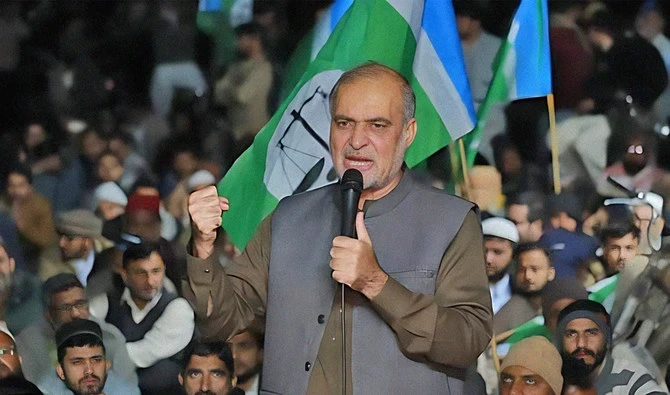
Abdul Ghafoor Haidri, a lawmaker and secretary-general of the Jamiat Ulema-e-Islam, said Monday’s engagement among the four countries reflected a long-standing aspiration among sections of Pakistan’s religio-political leadership to unite Muslim countries.
He said that negotiations with Iran could open a way for broader cooperation among Muslim-majority states.
“If Iran also becomes a part of this alliance with sincerity, along with Indonesia, Malaysia, and other Gulf states, then it will become a Muslim bloc, a force,” Haidri said.
He emphasized the religious significance of Saudi Arabia, saying attacks on the Kingdom had deeply affected Muslims around the world.
The lawmakers also underscored the diplomatic challenge facing Pakistan as it seeks to support Saudi Arabia’s security while encouraging the US-Iran dialogue to ensure regional peace.
Dr. Mirza Ikhtiar Baig, another PPP lawmaker, described the Tehran engagement as “historic” for efforts aimed at regional de-escalation.
“Pakistan’s position was that Iran should convince the Houthis, as Iran has influence on the Houthis, that they should not attack Saudi Arabia and religious places,” he said, warning that continued Houthi attacks could place Pakistan in a difficult position under its defense commitments to Saudi Arabia.
“Otherwise, we will have to come forward according to the accord. Pakistan will have to come forward under the defense pact.”