- The country’s IT exports reached a record $453 million in October, while freelancers earned a record $210 million during the month
- Islamabad seeks Islamic finance to be a driver of investment, entrepreneurship, financial inclusion and sustainable economic growth
KARACHI: Pakistan’s domestic sovereign Sukuk issuance has crossed Rs10 trillion ($36 billion), Finance Adviser Khurram Schehzad said on Wednesday, reflecting on the growing role of Shariah-compliant financing in the country.
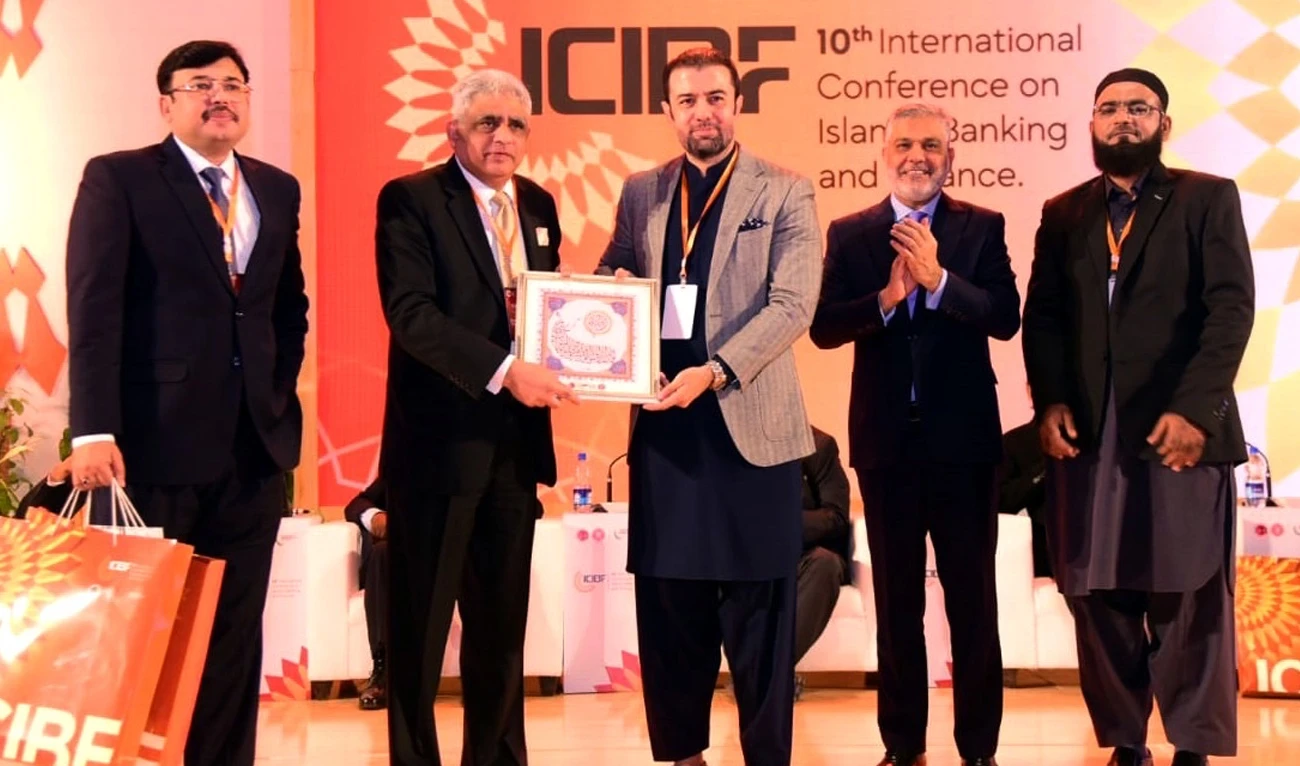
Speaking at the 10th International Conference on Islamic Banking and Finance (ICIBF 2026) in Karachi, Schehzad said Islamic finance had become an increasingly important pillar of Pakistan’s economic strategy as the government pursued macroeconomic stability, financial inclusion and private sector-led growth.
Pakistan has been seeking to expand Islamic banking as part of efforts to diversify its financial sector and mobilize domestic financing. The government has also accelerated reforms under its broader economic stabilization program aimed at strengthening public finances, attracting investment and boosting long-term growth.
The conference, held under the theme “Islamic Finance for National Transformation: Building a Riba-Free, Digital, Inclusive and Sustainable Economy,” brought together policymakers, bankers, academics and industry experts to discuss the future of Islamic banking and the transition toward a more inclusive, Shariah-compliant financial system.
“The cumulative domestic sovereign Sukuk issuance has crossed the historic Rs10 trillion milestone,” Schehzad said, calling for broader Islamic financial products, deeper capital markets and greater participation by individual, institutional and international investors.
“Islamic finance must evolve beyond traditional banking and sovereign financing to become a stronger driver of investment, entrepreneurship, financial inclusion and sustainable economic growth, supported by innovation, digital transformation and deeper participation by domestic and international investors,” he was quoted as saying by the information ministry.
Pakistan’s economy had transitioned from contraction to recovery, with real GDP growth rebounding to 3.7 percent in fiscal year 2026 that ended in June from a contraction of 0.2 percent in FY2023, according to the finance adviser.
Industrial growth had also recovered to 3.34 percent after shrinking 3.9 percent over the same period. Fiscal deficit had narrowed to below 3 percent of GDP in FY2026, its lowest level in 22 years, while the government had also achieved a primary fiscal surplus as part of broader efforts to strengthen public finances.
Highlighting improvements in Pakistan’s external position, Schehzad said the State Bank of Pakistan’s foreign exchange reserves had risen to $21.6 billion in November from around $3 billion during the country’s balance-of-payments crisis in FY2023. He said the government remained focused on diversifying financing sources, reducing borrowing costs and improving the maturity profile of public debt.
Schehzad also pointed to continued growth in Pakistan’s digital economy, saying information technology (IT) exports reached a record $453 million in October, up 17.4 percent from a year earlier, while freelancers earned a record $210 million during the month.
Pakistan’s IT exports rose to a record $4.6 billion in the fiscal year 2025-26 that ended in June and marked a 21 percent increase from a year earlier, according to officials.
Schehzad referred to the government’s affordable housing finance initiative, which provides eligible first-time homebuyers financing at a subsidised 5 percent markup rate for the first ten years. He underscored the importance of expanding access to affordable housing finance, including through Islamic banking institutions, to support wider financial participation and homeownership.
The finance adviser also outlined ongoing structural reforms, including privatization of state-owned enterprises, energy-sector reforms, taxation and pension reforms, and rightsizing of federal government ministries and departments. He stressed that sustained economic progress would require continued reforms, greater efficiency, stronger institutions and an enabling environment for private-sector investment.