- Shenzhou-24 crew completes launch rehearsal at China’s Jiuquan space center
- Pakistani astronaut set to become first foreign visitor to Tiangong space station
ISLAMABAD: China has successfully completed a launch rehearsal for its Shenzhou-24 spacecraft, which is set to carry Pakistan’s first astronaut into space, Pakistan’s space agency said on Sunday, as the two countries move a step closer to their first joint human spaceflight mission.
The mission will make the Pakistani astronaut the first foreign national to visit China’s Tiangong space station, extending bilateral cooperation beyond satellite launches to human spaceflight. Pakistan and China signed an agreement in February 2025 to train Pakistani astronauts for the mission.
According to Pakistan’s Space and Upper Atmosphere Research Commission (SUPARCO), the rehearsal took place at the Jiuquan Satellite Launch Center in northwest China, where all three crew members successfully completed the required pre-flight procedures.
“The everlasting Pakistan-China friendship is now transcending the limits of the Earth and reaching the vastness of space,” SUPARCO said in its statement.
Zhu Lu, an official at the China Astronaut Research and Training Center, said the three astronauts had demonstrated determination and performed all operations accurately during the joint exercise.
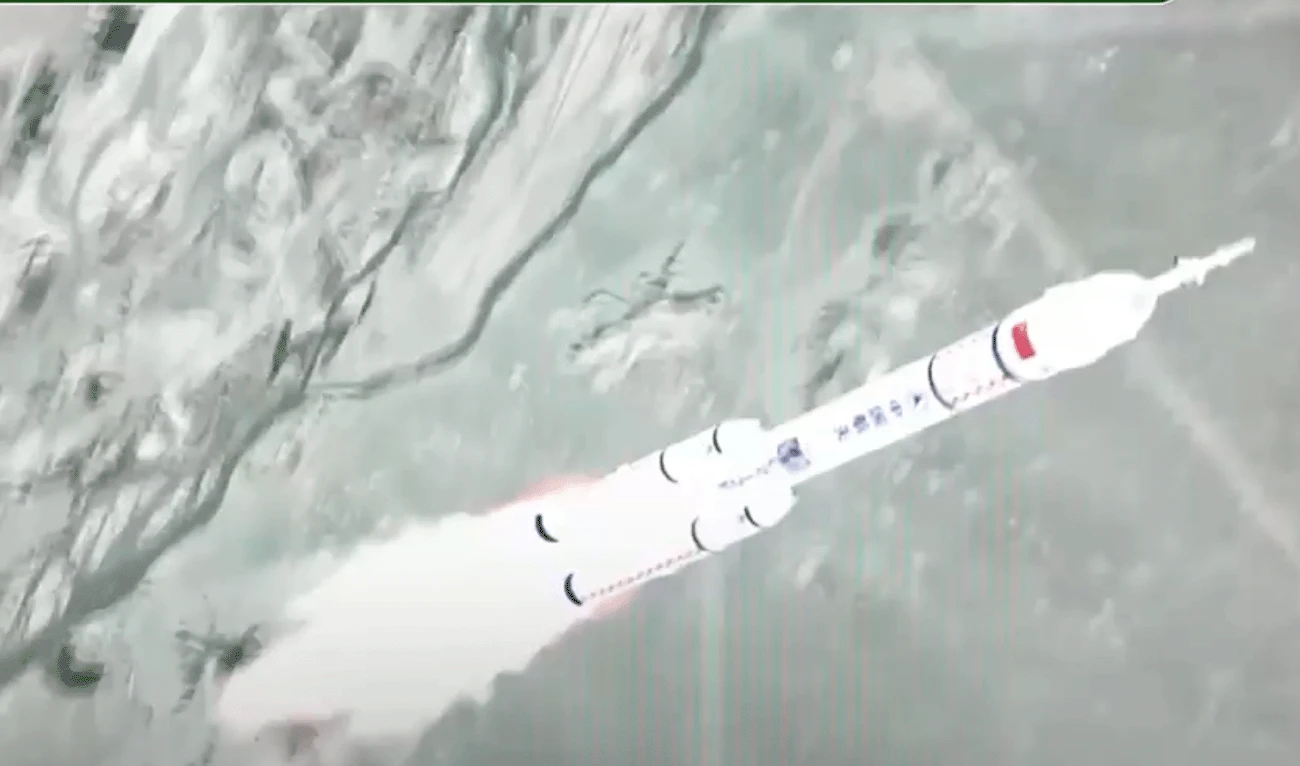
The Shenzhou-24 spacecraft and its Long March-2F rocket were moved to the launch area on Nov. 17 for final preparations. Chinese authorities have yet to announce a confirmed launch date.
Pakistan has shortlisted two pilots, Muhammad Zeeshan Ali and Khurram Daud, for the mission. One will travel to Tiangong as a payload specialist, while the other will serve as backup.
The selected astronaut is expected to spend about a week aboard the space station conducting scientific experiments before returning to Earth aboard the Shenzhou-23 spacecraft.
The mission follows years of expanding space cooperation between Pakistan and China, including Chinese launches of Pakistani satellites and plans to send a Pakistani-built rover aboard China’s Chang’e-8 lunar mission around 2028.
China completed construction of its Tiangong space station in 2022 and has sought to expand international participation in its space program as it works toward landing astronauts on the Moon by 2030.