- Pakistan says it is working with Islamic countries to advance women’s education and digital safety
- Minister Azam Nazeer Tarar cites national strategy to combat online harassment, AI-related threats
ISLAMABAD: Pakistan and Türkiye have agreed to strengthen cooperation on women’s empowerment, human rights and legal affairs during talks at an Istanbul summit, Pakistan’s Human Rights Ministry said on Sunday, as Islamabad leads efforts within the Organization of Islamic Cooperation to advance women’s education, economic opportunities and digital safety.
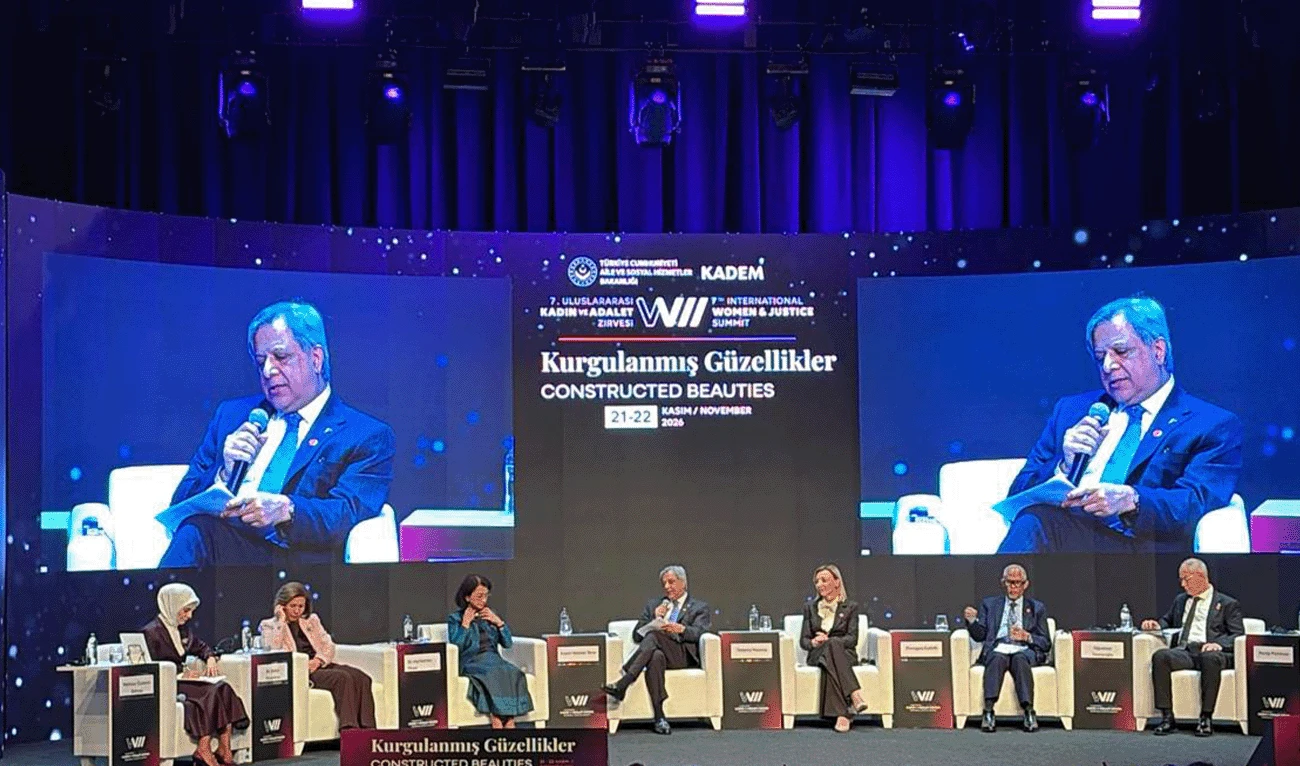
The discussions took place during the seventh International Women and Justice Summit, held on Nov. 21-22 under the theme “Constructed Beauties.” The gathering brought together policymakers, academics and civil society representatives to examine how beauty standards, including those reinforced by digital media and artificial intelligence, affect women’s rights, employment opportunities and participation in society.
Pakistan’s Law and Human Rights Minister Azam Nazeer Tarar addressed the summit’s leaders’ session and held separate meetings with Turkish Justice Minister Akın Gürlek and Family and Social Services Minister Mahinur Özdemir Göktaş, according to the ministry.
“Pakistan and Türkiye enjoy exemplary relations based on shared history, mutual trust and a common commitment to justice and human dignity,” Tarar said.
The two countries agreed to deepen cooperation in law and justice during Tarar’s meeting with Gürlek, while discussions with Göktaş focused on women’s empowerment, human rights and social protection programs.
Addressing the summit, Tarar said Pakistan was working with member states of the 57-nation Organization of Islamic Cooperation (OIC) to implement measures agreed at a ministerial conference on women’s rights hosted by Islamabad in July.
Pakistan assumed the two-year chairmanship of the OIC Ministerial Conference on Women after hosting its ninth session, which adopted the Islamabad Declaration outlining commitments to women’s social, economic and political empowerment.
The declaration calls on member states to remove barriers to women’s education and employment, expand access to vocational training and leadership opportunities, and improve women’s access to finance, entrepreneurship and social protection.
It also promotes women’s participation in technology and the digital economy, alongside measures to address online harassment.
“Pakistan has implemented a National Strategy to Prevent Technology-Facilitated Gender-Based Violence to address the risks women face from online harassment and the misuse of artificial intelligence,” Tarar said, according to the ministry.
The strategy, launched earlier this year, seeks to strengthen institutional coordination, improve support for survivors and address gaps in the legal and regulatory response to online abuse.