- Dar cites regional, European consultations and June memorandum as basis for diplomacy
- Foreign minister warns selective application of international law undermines global stability
ISLAMABAD: Pakistan will continue diplomatic efforts to bring the United States and Iran back to negotiations, Deputy Prime Minister and Foreign Minister Ishaq Dar said on Tuesday, warning that escalating conflicts and the erosion of international rules were threatening global stability.
The remarks come as Islamabad seeks to sustain its mediation role in the US-Iran conflict amid concerns over disruptions to energy supplies and shipping through the Gulf and Red Sea. Pakistan has repeatedly called for a diplomatic settlement, arguing that military confrontation risks wider economic shocks, particularly for developing countries dependent on imported energy and food.
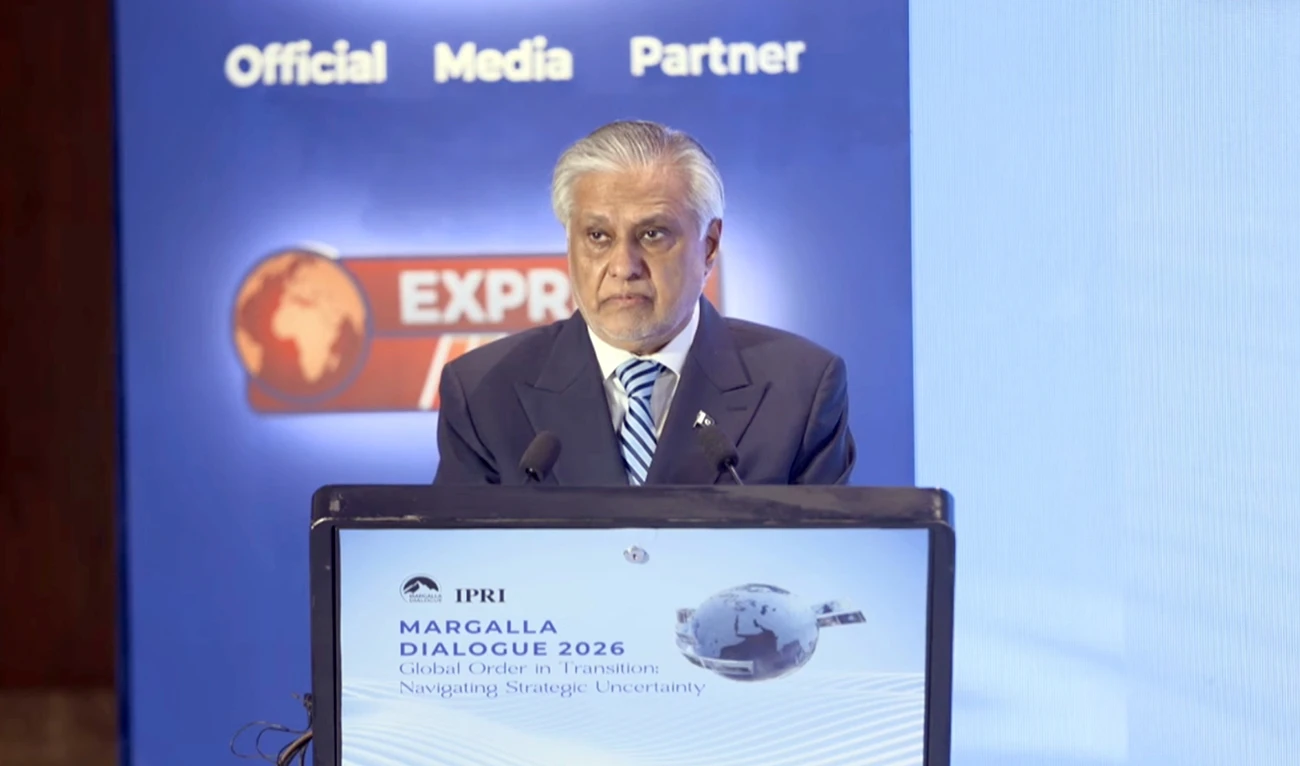
“Our experience reinforces a simple conviction. Even amid serious confrontation, channels of communication must remain open,” Dar said at the opening of Margalla Dialogue 2026 in Islamabad, which focused on the changing global order.
“Closing them makes the next crisis harder to manage and peace harder to achieve.”
Dar said Pakistan’s diplomatic engagement included talks hosted in Islamabad between the United States and Iran in April and a memorandum of understanding signed on June 18, which he described as a foundation for further negotiations.
He said he had remained engaged with Saudi Arabia, Türkiye and Egypt through a regional four-country grouping, which held consultations on October 23 with Britain, France, Germany and Italy.
“Pakistan continues to pursue all diplomatic efforts with regional partners and parties involved to sustain engagement, restore dialogue and facilitate a return to the negotiating table,” he said.
The deputy prime minister warned that intensifying rivalries, prolonged conflicts and the erosion of arms control agreements were increasing the risk of miscalculation, while political divisions were weakening multilateral institutions, particularly the United Nations.
“Selective application of international law further weakens confidence in the institutions established to uphold the same,” he said. “When agreed principles are applied inconsistently, their authority suffers and every country becomes less secure.”
Dar said Pakistan supported a more representative multipolar international order, but cautioned that a wider distribution of power would not necessarily produce greater fairness or stability without effective institutions and respect for agreed rules.
He linked the changing security environment to economic vulnerabilities, warning that conflicts could rapidly disrupt trade, technology, energy supplies and access to finance.
“A security crisis can become an economic shock,” he said. “That shock can raise food and fuel prices we are witnessing currently, threaten livelihoods and place public services under further pressure.”
He said Pakistan would continue strengthening its partnerships with China, the United States, Saudi Arabia, Türkiye and other countries while pursuing economic diplomacy to attract investment, expand exports and build technological capacity.
Dar also reiterated Pakistan’s positions on Kashmir, the Indus Waters Treaty and security threats emanating from Afghanistan, saying regional stability depended on respect for international agreements and the peaceful resolution of disputes.
“The future international order will be shaped by the choices countries make today,” he said. “Pakistan will make these choices with a clear sense of its responsibilities to safeguard our sovereignty, advance the well-being of our people, and contribute to a more peaceful and equitable world.”