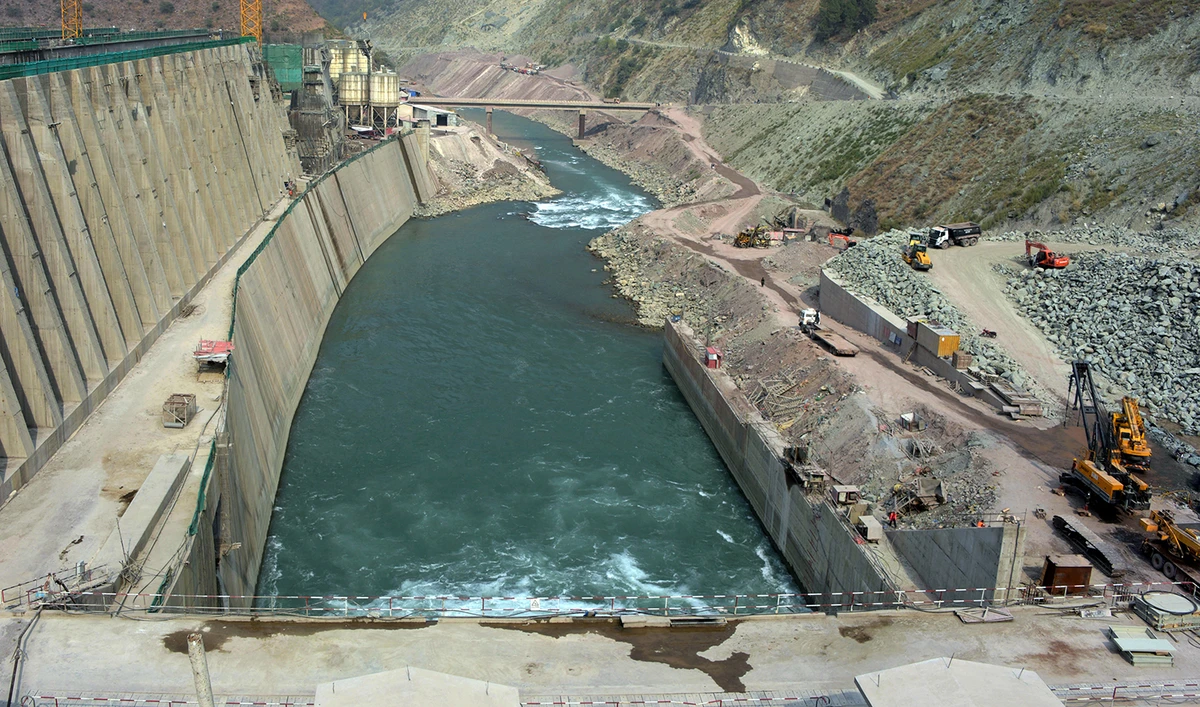
- Senate Chairman Yousuf Raza Gillani says the Indus Waters Treaty with India remains binding
- India last year announced that it was placing the World Bank-brokered agreement ‘in abeyance’
ISLAMABAD: Pakistan will not allow water to be used as an “instrument of geopolitical pressure,” chairman of the upper house of Pakistan parliament said on Monday, reaffirming Islamabad’s position on India’s move to put the Indus Waters Treaty (IWT) in abeyance.
Signed in 1960, the treaty was brokered by the World Bank and governs the distribution of waters from the Indus river system, allocating the western rivers — Indus, Jhelum and Chenab — primarily to Pakistan, which relies on them for most of its agriculture. The three eastern rivers — Ravi, Beas, and Sutlej — were allocated primarily to India for unrestricted use.
India announced in April 2025 that it was placing the treaty “in abeyance” following a deadly militant attack in Indian-administered Kashmir that New Delhi blamed on Pakistan. Islamabad denied the allegation and maintains that the treaty cannot be suspended unilaterally.
Speaking at the opening ceremony of Pakistan Water Week 2026, Pakistani Senate Chairman Yousuf Raza Gillani stressed the significance of the IWT, saying the treaty remained binding and no single party could alter it unilaterally.
“Pakistan will never allow water to be used as an instrument of geopolitical pressure,” he said in televised comments. “Any attempt to block or divert Pakistan’s share of water will be treated as an act of war.”
There was no immediate response from New Delhi to the statement.
Pakistan accuses India of pursuing reservoir, expansion and diversion projects on rivers covered by the IWT in violation of the agreement. Pakistani officials have said in recent months that they have witnessed unusual fluctuations in river flows.
Last month, Prime Minister Shehbaz Sharif also said that water remained a “red line” for Pakistan and Islamabad had conveyed its position at international forums, including the United Nations General Assembly.
“Water flows in every canal, river, ocean and sea, carrying a message of prosperity and progress, not threats, confrontations and conflicts,” Sharif said.
“Pakistan’s position is loud and clear, beyond any doubt, that legally binding treaties must be respected, and shared water resources must never be weaponized.”