- The statement comes amid fresh diplomatic efforts to avert any resumption of fighting between the US and Iran
- Trump said on Saturday the US knocked out much of Iran’s military but still has to ‘take care of’ one or two targets
ISLAMABAD: Iran has shared with Qatari and Pakistani mediators a two-day plan to reopen the strategic Strait of Hormuz, Iran’s foreign minister has said, signaling a potential diplomatic breakthrough to restore shipping through one of the world’s most important energy chokepoints after days of disruption.
The Strait of Hormuz, a narrow waterway between Iran and Oman, carried roughly one-fifth of the world’s oil and a significant share of global liquefied natural gas exports.
Tehran has maintained its stranglehold on the waterway since the US launched its war on Iran in 0late Feb., while Washington continues a counter-blockade of Iranian ports.
After a June interim ceasefire crumbled and on-off strikes resumed, Iran presented its proposal to reopen Hormuz in mid-September and later confirmed receipt of a US response.
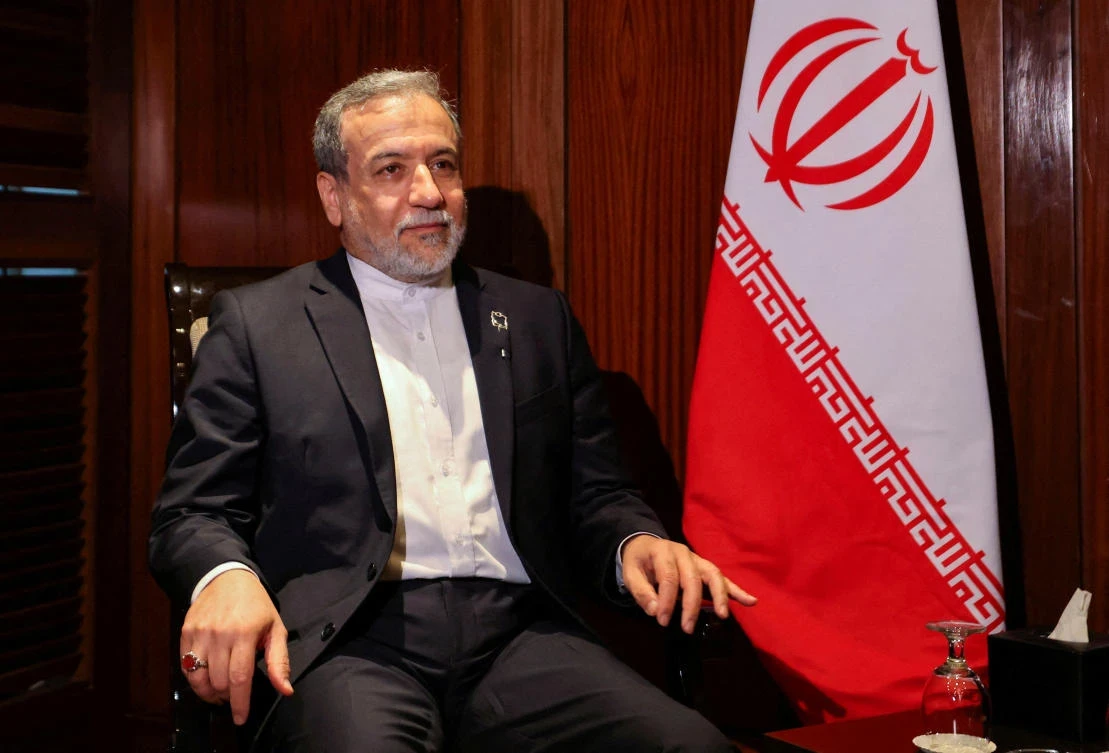
“The plan on the table is the plan that Iran presented in the beginning, known as the Iran plan of the seven days, in which Iran set its conditions for the reopening of the Hormuz strait,” Iranian Foreign Minister Abbas Araghchi told Al-Jazeera on Sunday.
“Our Qatari and Pakistani friends conducted many negotiations on this issue, and proposed ideas to make the Iran plan of the seven days more feasible and more widely accepted,” he said.
“I can say that we have now reached a two-day plan. This means that on the first day, America will implement a set of measures, and on the second day, the opening of the Hormuz strait will be reopened, and the movement will return to its previous state.”
The statement comes amid fresh diplomatic efforts to avert any resumption of fighting.
Qatari mediators landed in Tehran on Friday, and US Vice President JD Vance sent a letter to Iran’s security chief Mohsen Rezaei.
“I read the letter,” said Rezaei, head of Iran’s supreme national security council, in a video broadcast on Iranian television.
“I haven’t yet responded. Their tone has completely changed,” he added, describing that as “a good sign” without going into more detail.
Rezaei insisted Iran would continue to blockade the Strait of Hormuz until its conditions, including releasing frozen assets, were met.
Qatar and Pakistan have been mediating between the warring parties, but the talks have yet to produce a lasting agreement.
President Donald Trump said on Saturday that the United States has knocked out much of Iran’s military but still has to “take care of” one or two targets as Tehran warned of reprisals if attacked.
Trump maintained that negotiations with Iran to end the war were “going fine but you know they’re not very reliable.”
Iran’s supreme leader on Saturday warned the United States and Israel against launching a new offensive, following threats they could resume strikes after crucial elections in both countries.
“Any level or type of threat must be met with an immediate, impactful and geographically unrestricted response,” Iran’s supreme leader Mojtaba Khamenei told top military commanders, according to a statement.
Khamenei also ordered commanders to update Iran’s target list to include “all types of tangible and intangible assets belonging to the American-Zionist enemy.”
This was the first reported meeting between Khamenei and military top brass.
The supreme leader has not been seen publicly since before he took the helm in March, after the killing of his father Ayatollah Ali Khamenei in US-Israeli strikes.
— With additional input from AFP.