- Iran border restrictions compound shortages with consumers facing rising cooking costs
- Government says exploring alternative imports and relief measures for low-income families
ISLAMABAD: Liquefied petroleum gas (LPG) prices in Pakistan have climbed to nearly twice the official rate, distributors and consumers said on Tuesday, as supply disruptions linked to the Iran border closure and rising distribution costs squeeze households and small businesses.
The Oil and Gas Regulatory Authority (OGRA) set the October price of locally produced LPG at Rs279.34 ($1) per kilogram, or Rs3,296.23 ($11.80) for an 11.8-kg domestic cylinder. But dealers in Islamabad said they were selling LPG for around Rs550-600 (up to $2.17) per kg, while the prices ranged between Rs700 ($2.53) and Rs800 ($2.9) in smaller towns and mountainous areas.
The increase in prices comes amid disruptions to supplies through Pakistan’s border with Iran, while dealers also cite transportation expenses, international market costs and opaque pricing by private suppliers.
Pakistan relies on imports for around 70 percent of its LPG requirements, according to Irfan Khokhar, chairman of the LPG Distributors Association. The absence of imports through a domestic terminal had compounded supply pressures, while Iranian border restrictions had deteriorated the situation.
“The government should immediately take local gas into its custody and import it through its own terminal,” Khokhar told Arab News, arguing that combining domestic production with imported supplies could help bring prices down.
Dealers complained that private LPG plants were charging inflated wholesale prices without providing receipts or invoices, making it difficult to transparently establish costs.
“We are getting gas at inflated prices because private plants do not provide us with receipts or invoices. They charge whatever rates they want,” said Majeed Khan, an LPG retailer in Islamabad’s Aabpara market.
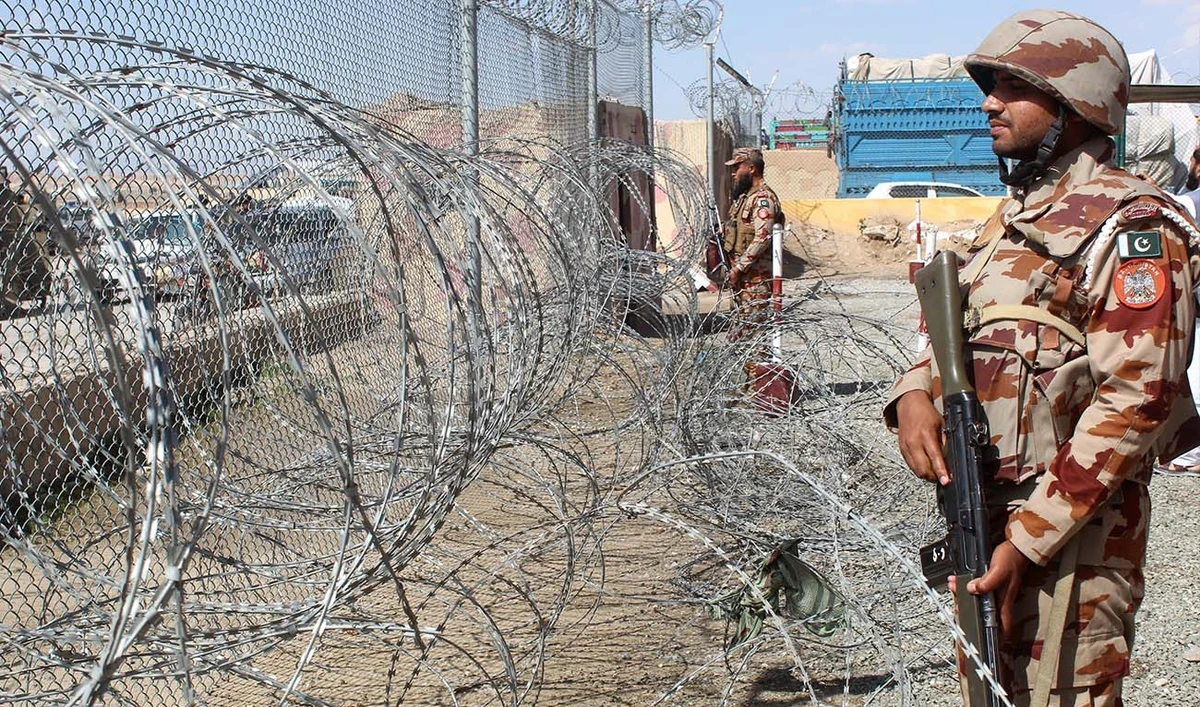
Pakistan shares an over 900-kilometer (559 miles) border with Iran through which the two nations conduct trade and travel on a daily basis. Pakistani officials announced on Oct. 17 that authorities had temporarily closed border crossings with Iran due to security reasons, while Tehran pointed to technical reasons for the closure. The border was reopened on Sunday, a trader and a customs clearing agent told Arab News.
The price of an 11.8-kg cylinder at the plant had risen to around Rs5,650 ($20.45), forcing retailers to charge about Rs550 ($1.99) rupees per kilogram to cover operating expenses, including electricity and staff salaries, according to Khan.
Even if supplies through the Iranian border resume normally, consumers may have to wait for prices to ease.
“Even if the border has reopened, as we have heard, it will take at least seven to 10 days,” Khan told Arab News, citing the time required to transport cylinders to Islamabad, Rawalpindi, Lahore and other cities.
Ali Hyder Bhutto, a customer at his shop, said the cost of refilling a cylinder had risen from Rs450 ($1.63) to as much as Rs570 ($2.06).
“If you look at the government-fixed rates, we are not getting gas at those prices,” he said, adding that daily-wage workers and middle-income families were struggling to afford fuel for cooking.
Petroleum Minister Ali Pervaiz Malik told parliament on Monday that the closure of the Pakistan-Iran border was one of the main reasons for soaring LPG prices. He said the government was seeking supplies through sea routes and exploring other sources as supplies from Qatar remain suspended due to the United States-Iran conflict.
Malik said the government was also preparing a policy to protect low-income households, acknowledging that while OGRA regulated the price of locally produced LPG, the government lacked a comprehensive pricing mechanism for imported supplies.
Arab News contacted Malik and the petroleum ministry’s spokesperson for comment on measures to ensure uninterrupted supplies, enforce notified prices and prevent overcharging, but neither responded.
The impact is also being felt by small businesses. Muhammad Adnan, who works as a manager at a restaurant in Islamabad’s Javed Market, said rising LPG costs had increased their operational expenses.
Previously, he said, a cylinder refill costing Rs3,000 ($10.86) lasted two to three days, but gas purchased for the same amount could run out within a day.
“We cannot increase our prices because we have maintained the same rates for a long time. With gas becoming more expensive, we are not making any profit,” he said.
As colder weather approaches, the gap between the official price and what consumers pay remains a concern.
Dealers warn that even if supplies improve, transport and distribution delays could prevent an immediate reduction in retail prices.
“With prices rising, poor families are struggling to keep their stoves burning properly,” Islamabad resident Sajjad Aziz said, urging the government to take immediate measures to bring down LPG prices.